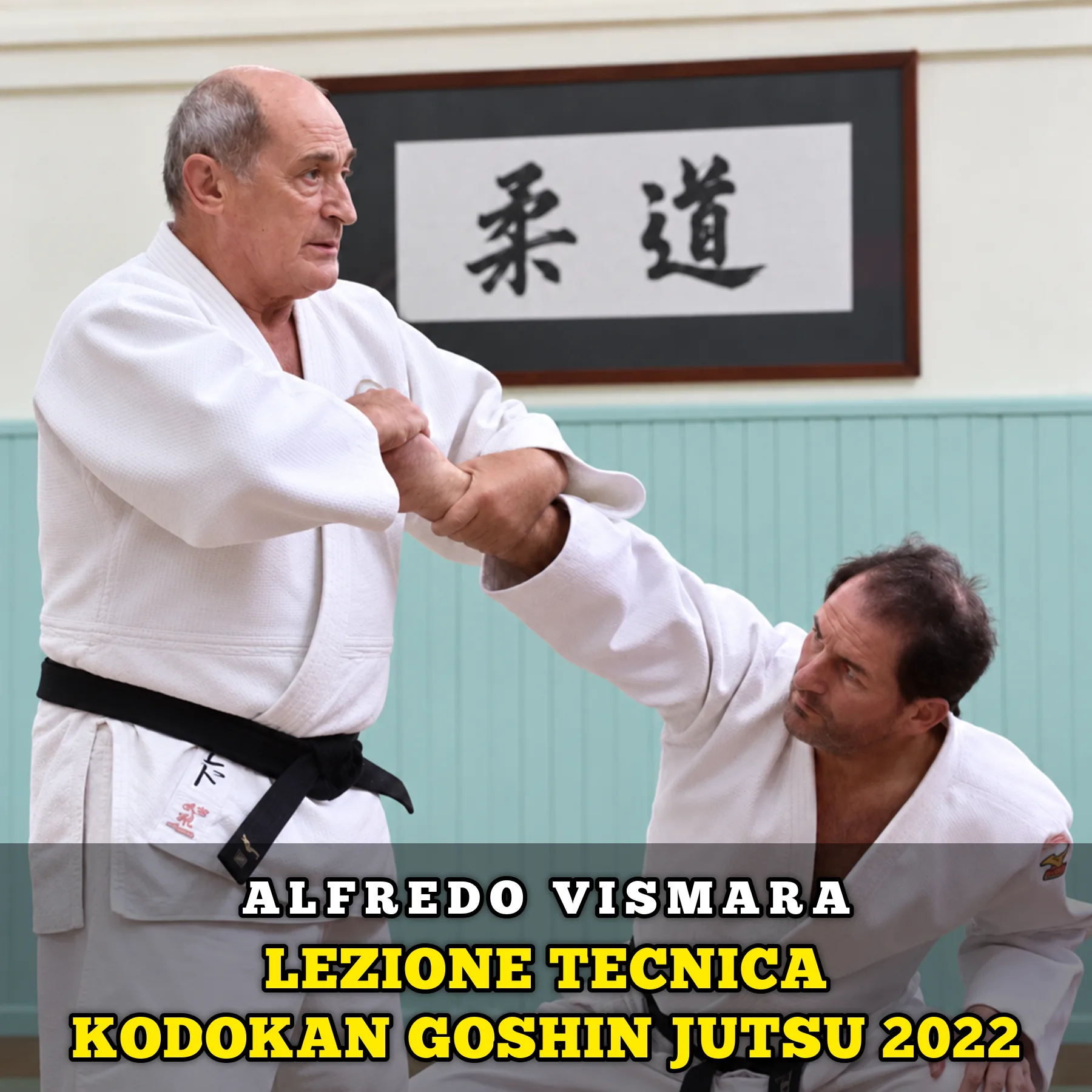
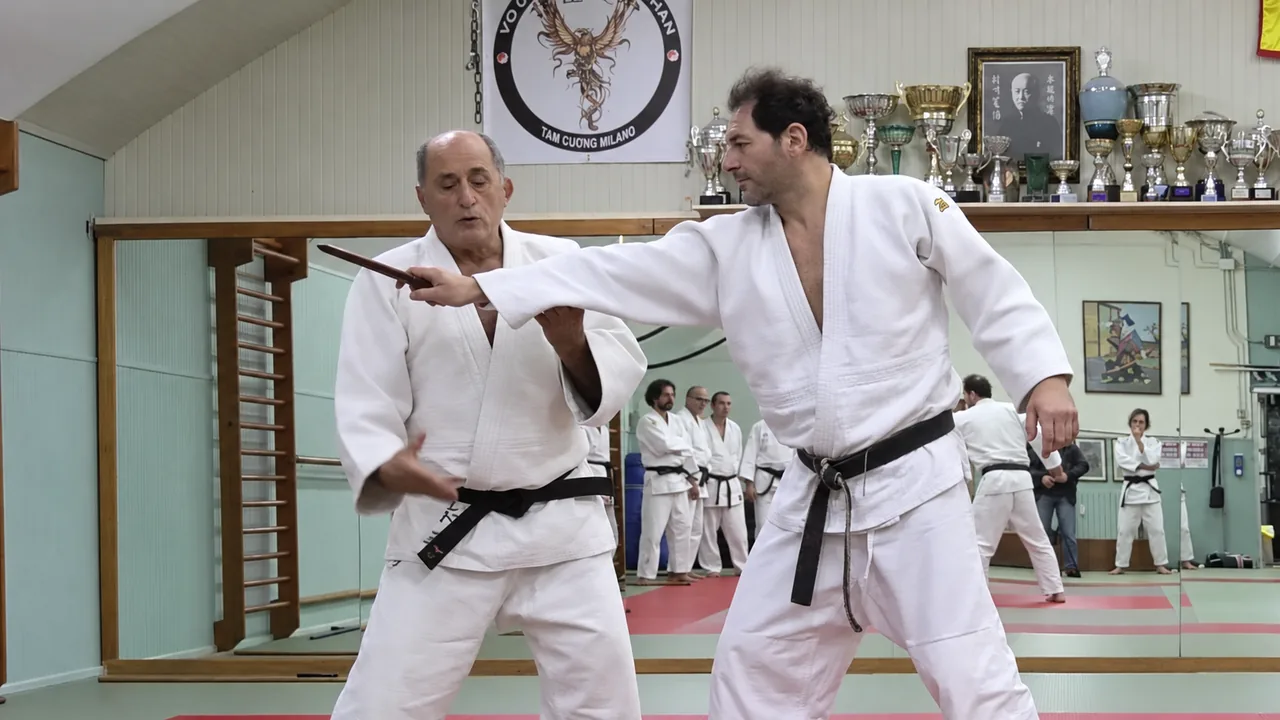
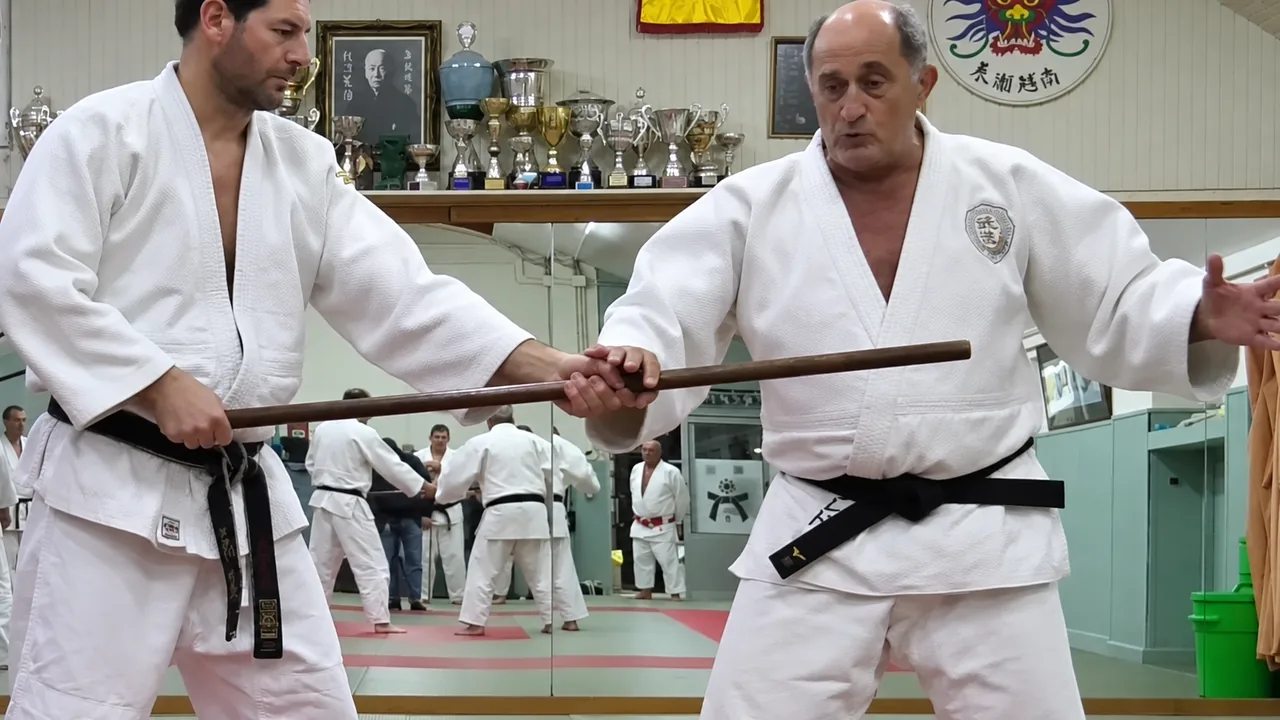
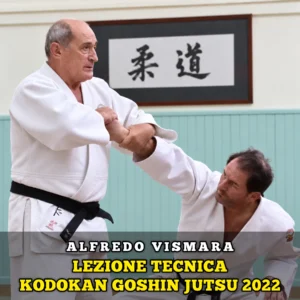
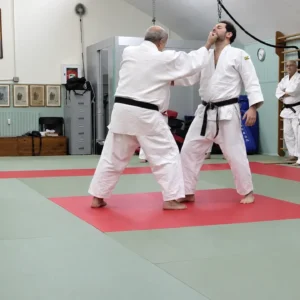
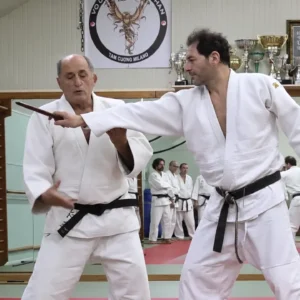
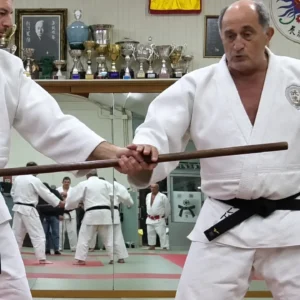
Technical lesson on Kodokan Goshin Jutsu taught by Master Alfredo Vismara on 19 November 2022. Length: about 52 minutes. The lesson is taught in Italian.
“First you need to be precise with your movements, precise with your atemi, to give meaning to what you do.” – Alfredo Vismara
Kodokan Goshin Jutsu is the most recent of the Kodokan kata: the form of self-defence techniques. In its first draft it was called Shin Kime no Kata, “new Kime no Kata”, because it was created to give Judo a more modern form of self-defence than Kime no Kata, which was still tied to the ceremonial of old Japan, with its kneeling part and the use of the katana. Together with Kime no Kata it is one of the great references for studying Shobu Ho, the real-combat side of Judo.
The kata is divided into two parts: Toshu no bu, unarmed defences against holds, punches and kicks, and Buki no bu, defences against the dagger, the stick and the pistol.
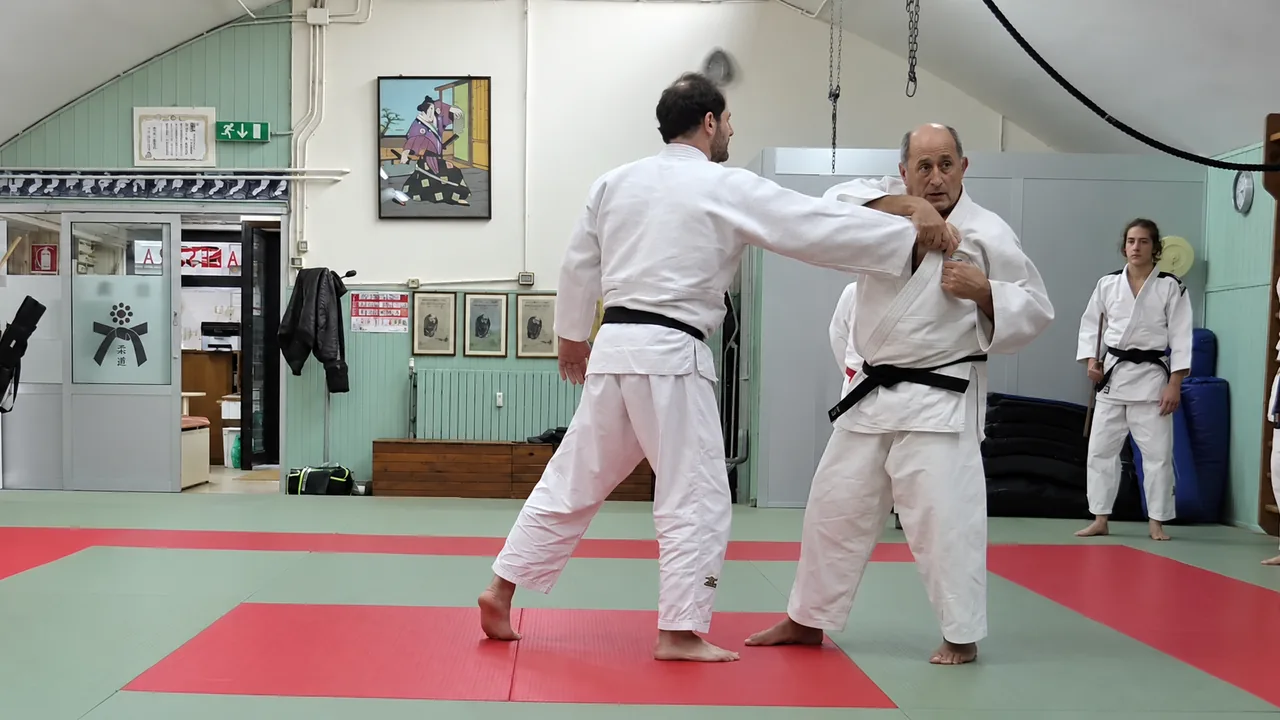
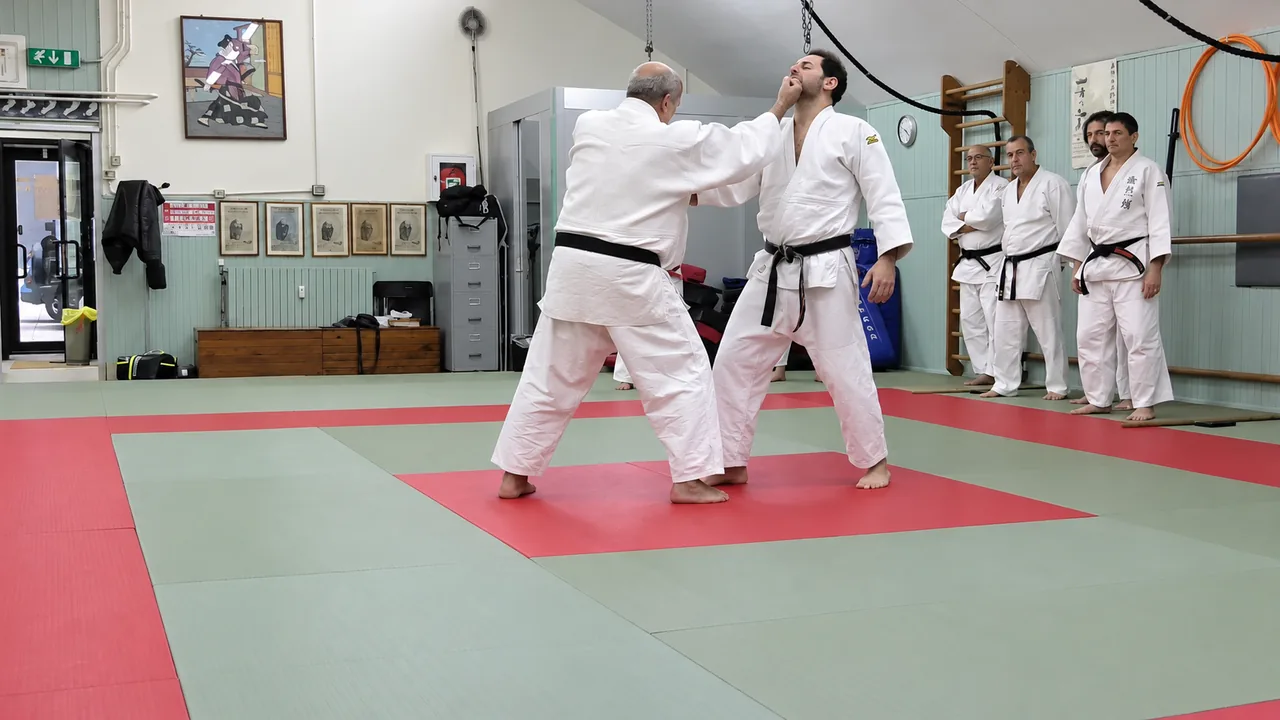
In this lesson the Master takes Tori and Uke through the whole kata, from laying out the weapons to the final bow. For each technique he shows the attack, the defence, the atemi and the control, and explains the details that give every movement its meaning.
What the lesson covers
- The history of the kata: Jigoro Kano’s idea, never formalised before his death, Kenji Tomiki sent to study with Ueshiba, the founder of Aikido, the work of the Kodokan high grades from 1950 and the official presentation in January 1956.
- The revisions of 1985, 2001 and 2004, and the final choice of Shizentai, instead of the Jigotai of Kime no Kata, in Tori’s positions.
- The name: from Shin Kime no Kata to Kodokan Goshin Jutsu, and why it is in every respect one of the fundamental Kodokan kata.
- Weapons etiquette: how Uke carries the pistol, the dagger and the stick, the bow, and the order in which he lays them down and picks them up.
- Toshu no bu: the defences against holds, including Ryote dori, Hidari eri dori, Migi eri dori, Kata ude dori, Ushiro eri dori and Ushiro jime, and those against three punches and two kicks, Mae geri and Yoko geri.
- Buki no bu: the defences against the dagger, at close range and from a distance, against the stick and against the pistol pointed from the front, at the side and at the back.
- Atemi and controls: Metsubushi, Shotei ate, Kote hineri, Kote gaeshi, Waki gatame, Ude gatame, Osoto otoshi and Hadaka jime.
The details that make the difference
- How Uke holds the dagger: thumb on the pommel when attacking from above, little finger when attacking the stomach. And why in Morote tsuki the stick must be treated as a spear.
- The joseki: why Tori and Uke must never turn their backs when returning to their places, and how they exchange positions during the kata.
- Why in Goshin Jutsu Waki gatame is controlled from the back of the hand and not from the wrist as in randori.
- Why Tori’s and Uke’s steps must not be synchronised as in Kime no Kata.
- Why after a throw Tori moves away from Uke at once instead of staying close.
- Uke’s gaze, which must keep Tori under control at every moment.
Precision first, then speed
As in every kata, what matters is not speed but precision: you move slowly, take care of the grip, look at where to strike. Only when every step has been memorised can you raise the pace. Being fast with the wrong movements is no use.
Who it is for
For those preparing Kodokan Goshin Jutsu for grading exams and for those who want to study it steadily throughout the year. For teachers who want to pass it on with attention to the details of both Tori and Uke. And for anyone who wants to know the side of Kodokan Judo devoted to self-defence and real combat.
Video helps you observe: it is practice on the tatami, together with your Uke, that lets you start to feel.